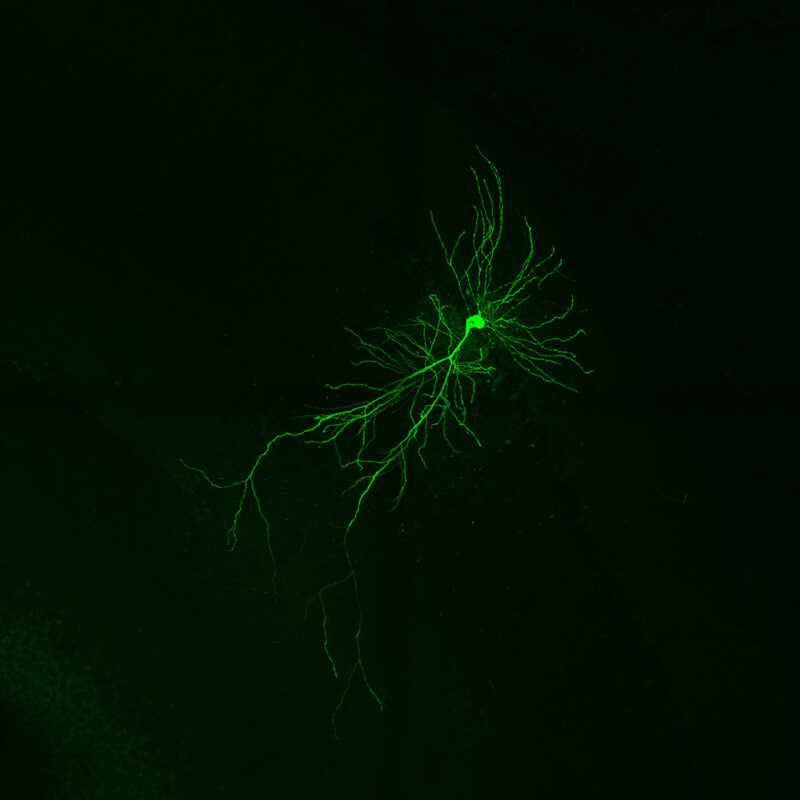
Image legend:
Neuronal microexon in DAAM1 identified as a master regulator of synaptic actin dynamics and memory_MI_2
Neuronal microexon in DAAM1 identified as a master regulator of synaptic actin dynamics and memory
An international study co-led by researchers at Barcelona’s biomedical ecosystem, led by MELIS-UPF, discovered that a single, highly conserved microexon within the DAAM1 gene acts as a critical molecular switch regulating cognitive function. This multidisciplinary research demonstrates that the inclusion of this tiny coding sequence alters DAAM1 protein interactions, directly controlling cytoskeleton remodeling via the RHOA/ROCK signaling pathway in neurons. Deletion of this microexon in animal models disrupted actin dynamics, leading to structural defects in dendritic spines and significant impairments in long-term memory formation. By mapping this precise alternative splicing event to complex cognitive behaviors, the study uncovers a novel genetic mechanism underlying synaptic plasticity and provides new potential therapeutic targets for neurodevelopmental and cognitive disorders.
Reference:
Poliński P, Miret Cuesta M, Zamora-Moratalla A, Mantica F, Cantero-Recasens G, Viana C, Sabariego-Navarro M, Normanno D, Iñiguez LP, Morenilla-Palao C, Ordoño P, Bonnal S, Ellis JD, Gómez-Riera R, Fanlo-Ucar H, Yap DS, Martínez De Lagrán M, Fernández-Blanco Á, Rodríguez-Marin C, Permanyer J, Fölsz O, Dominguez-Sala E, Sierra C, Legutko D, Wojnacki J, Musoles Lleo JL, Cosma MP, Muñoz FJ, Blencowe BJ, Herrera E, Dierssen M, Irimia M (2025). A highly conserved neuronal microexon in DAAM1 controls actin dynamics, RHOA/ROCK signaling, and memory formation. Nature Communications, 16(1), 4210. DOI: 10.1038/s41467-025-59430-w