Image legend:
Generative AI outperforms nature in designing next-generation genome editors.pdf
Generative AI outperforms nature in designing next-generation genome editors
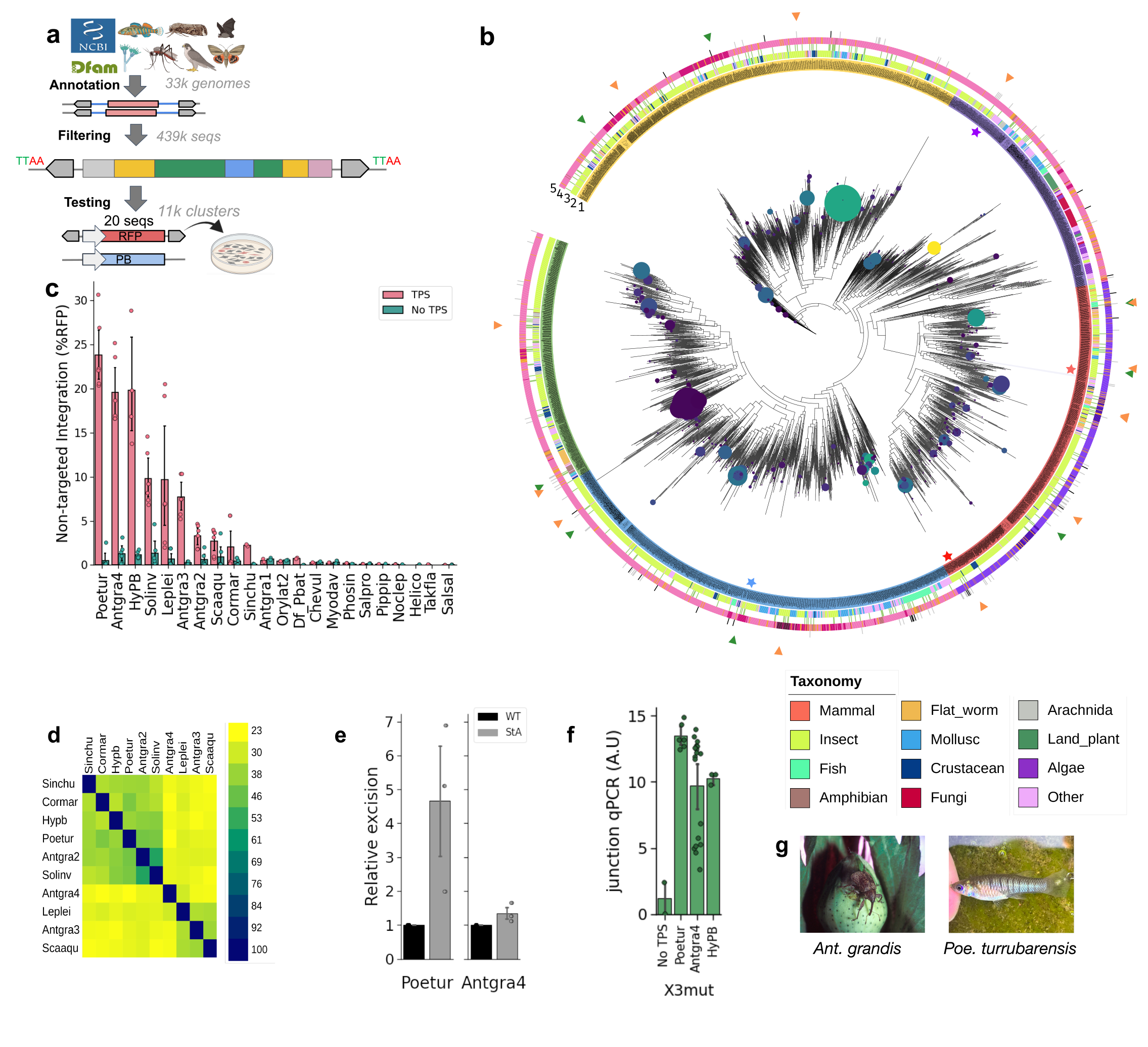
A collaborative study between MELIS-UPF, its spin-off Integra Therapeutics, and the Center for Genomic Regulation (CRG) demonstrated that generative AI tools can engineer programmable genome-editing proteins with superior efficiency to those found in nature. By training advanced protein language models on the vast diversity of natural mobile genetic elements, the researchers guided the design of partially synthetic, hyperactive transposases. This approach allowed the team to strategically alter targeted regions of the proteins while preserving the essential, conserved motifs required for DNA interaction. Following rigorous laboratory validation, these AI-designed variants achieved unprecedented editing efficiency, establishing a powerful new paradigm for the development of safer, highly scalable, and more precise gene therapies.
Reference:
Ivančić D, Agudelo A, Lindstrom-Vautrin J, Jaraba-Wallace J, Gallo M, Das R, Ragel A, Herrero-Vicente J, Higueras I, Billeci F, Sanvicente-García M, Petazzi P, Ferruz N, Sánchez-Mejías A, Güell M (2025). Discovery and protein language model-guided design of hyperactive transposases. Nature Biotechnology. DOI: 10.1038/s41587-025-02816-4